
Repairs & referrals
What gets fixed here, and what gets handed to a specialist.
Plumbing and equipment replacement are in the wheelhouse. High voltage, panels, bonding, tile calcium removal, and mastic are not — and you'll get the right person instead of an improvised fix.
Handled in-house
The line is simple: wet side is mine, anything with a wire is not. Pipe, valves, filters, cleaners, and the parts of the pad that don't require an electrician.
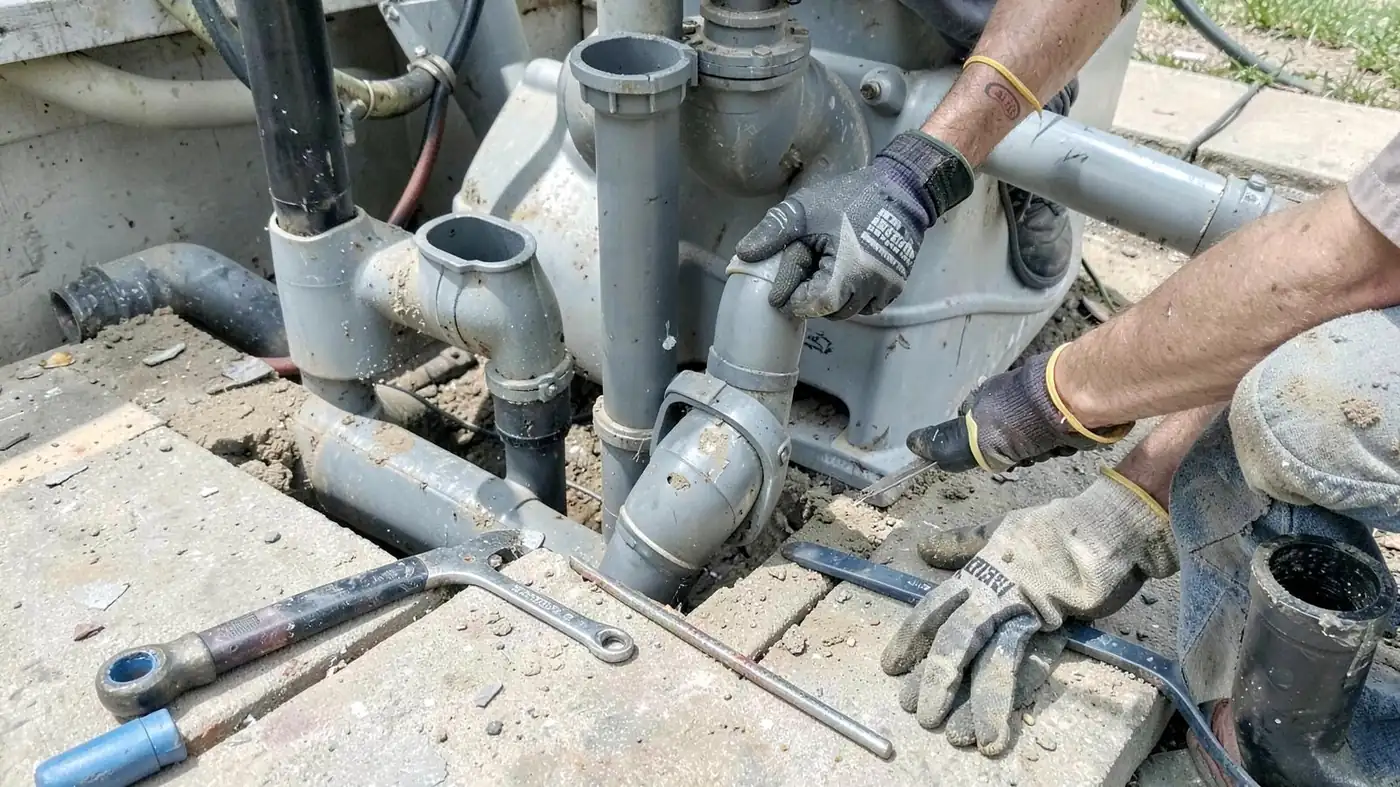
- PVC plumbing repairs: cracked pipe, failed unions, leaking couplings, and pad re-plumbs
- Valve replacement — diverter, multiport, ball, and check valves
- Filter replacement: cartridge housings, DE grids and manifolds, complete filter swaps
- Cartridge and DE element replacement sized to your pump and pool volume
- Pool cleaner replacement, hose and diaphragm rebuilds, wheel and bag work
- Skimmer basket, weir, lid, return fitting, and eyeball replacement
- Pump wet-end parts — lids, O-rings, seals, baskets, and gaskets
- In-line and offline erosion chlorinator and feeder replacement (plumbing side)
- Salt cell cleaning — pulled, acid-bathed, plates inspected, done quarterly alongside your filter clean
- Winterizing and freeze protection on the plumbing side
- Pump replacement on the plumbing side — note that since the 2021 federal efficiency standard, a failed main filtration pump is generally replaced with a variable speed unit; booster and small water feature pumps can still be single speed, and any panel, high-voltage, or bonding work goes to a licensed electrician
Repairs are quoted before anything is cut. If a job turns out to be bigger than it looked once it's open, you get a call, not a surprise invoice.
The hard line
Anything electrical goes to a licensed pro.
Pools and electricity are the one place where a confident guess kills someone. This boundary is not negotiable.
- Breaker panels, sub-panels, and any work behind the panel cover
- High-voltage pump, heater, and automation wiring
- Bonding and grounding — the grid that keeps a pool from becoming energized
- Pool and landscape lighting circuits, transformers, and niches
- Salt system installation and salt cell replacement — cleaning yours is my work, wiring one in is not
- Automation and heater board diagnostics that require live circuits
- Gas line work on heaters
When any of that comes up, you get a plain explanation of what's failing, what it likely costs, and a referral to someone who does that work every day. No markup, no finder's fee, no pressure to use anyone in particular.
My part is stopping the cause. If your tile is scaling or your mastic is failing, the repair is one half of the fix — balanced water is the other half, and that's the part I own.
Central Texas specialty
Calcium, scale, and mastic — the things our water does to stone.
Hill Country fill water is hard, and it shows up on tile lines and natural stone faster here than almost anywhere. We identify it, treat the water so it stops getting worse, and refer the removal.
Calcium carbonate vs calcium silicate
Carbonate scale is the chalky white crust at the waterline and it fizzes with acid. Silicate scale is the harder, grayish-white film that doesn't react at all and usually means the water has been out of balance for years. They come off very differently, so identifying which one you have protects the tile.
Removal is a trade
Bead blasting, glass blasting, and salt blasting all take equipment and a real feel for the surface. On glass tile, travertine, flagstone, and limestone coping, the media and pressure have to match the surface. That's work worth handing to a specialist, and the referral is a careful one.
Mastic and expansion joints
The flexible joint between your coping and deck is what keeps a shifting slab from cracking your beam. When it dries, splits, or disappears, water gets under the deck — which in our clay soil is how tile pops and coping lifts. Replacement is a specialty trade and we'll point you at one.
Our part: stop the cause
Removal without a chemistry change is a bill you'll pay again in eighteen months. LSI balancing is what keeps calcium in solution, and it's the difference between blasting tile once and blasting it repeatedly.
Also referred
Other work we hand off
Same rule every time: if it isn't done right by us, it goes to someone who does it right.
- Plaster, pebble, and quartz resurfacing
- Tile replacement and coping reset
- Structural leak detection and pressure testing beyond a visual check
- Deck repair, resurfacing, and drainage correction
- Heater internal repair and gas work
- Major automation installs and control system replacement
See the full list of what our trusted Austin-area specialists handle — remodels, replaster, leak detection, tile blasting and sealant, decks, electrical, and gas.
Something on the pad not working?
Tell us what it's doing. If it's ours to fix, you'll get a quote. If it isn't, you'll get the right name.