
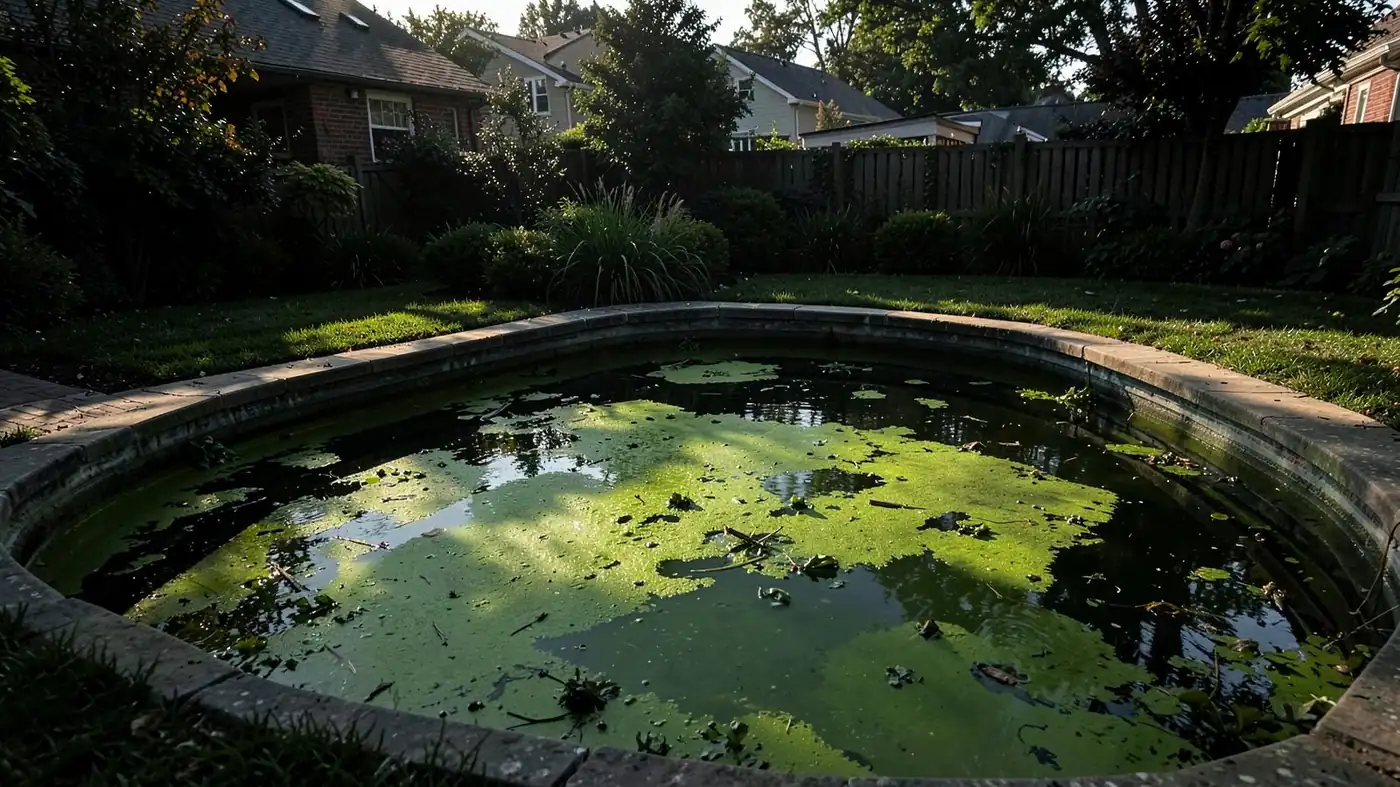
Recovery work
Green to clean, or drain to clean.
Two very different jobs. Matching the right one to your water saves hundreds of dollars in chemicals.
Green to clean
For a pool that went green from neglect, a vacation, a storm, or a pump that quit — but whose water chemistry can still be corrected.
- • Full water test and LSI assessment before anything is added
- • Debris removal and heavy netting
- • Shock treatment sized to the pool volume and current CYA
- • Filter run, clean, and repeat cycles as the water clears
- • Brushing every pass to keep algae from re-anchoring
- • Final balance and a plan so it does not happen again
Most recoveries take several days and multiple visits. Anyone promising a same-day green-to-clean is either draining it or telling you a story.
Drain to clean
For water that is chemically finished: cyanuric acid too high for chlorine to work, runaway calcium hardness, or total dissolved solids past the point of no return.
- • Confirm with testing that draining is genuinely required
- • Time the drain around weather, water table, and surface type
- • Controlled drain and pressure-washed surface where appropriate
- • Refill and a careful startup balance on fresh water
- • New baseline readings so the season starts from known numbers
Draining a pool in Texas clay and heat carries real risk to the shell and the plaster. It gets planned, not improvised.
The usual culprit
High cyanuric acid is why your chlorine stopped working.
Stabilizer protects chlorine from the sun, but it does not evaporate. Every trichlor tab adds more, and eventually chlorine is bound so tightly it stops killing anything.
Pool gone green?
Send a photo with your request if you can. A quick test on site tells us whether it's a recovery or a refill.