
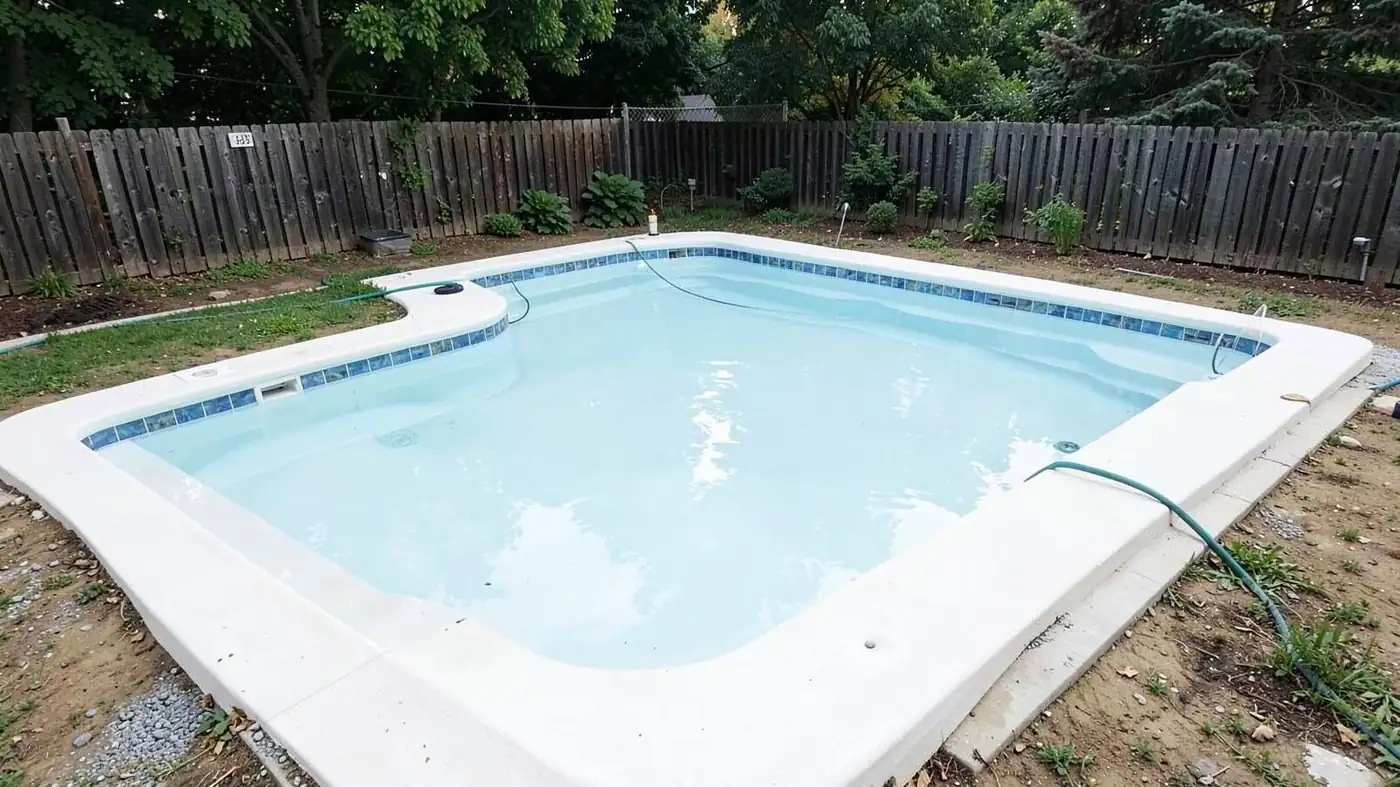
Just inherited a pool?
Nobody hands you a manual with the house.
Whether you closed on a home with a pool or a builder just handed you a brand new one, the first year is where good habits or expensive ones get set. Here's the honest version.
First, the reassuring part
A pool is not complicated. It's just unforgiving about a couple of specific things.
Most of what goes wrong with a residential pool comes down to three things: water that isn't circulating enough, chemistry that's drifted somewhere it slowly damages the surface and the equipment, and baskets nobody emptied. Everything else is downstream of those.
The reason new owners get overwhelmed is that the pool store sells solutions to symptoms. You bring in a water sample, you leave with four bottles, and nothing explains why the problem keeps coming back. Understanding two or three underlying numbers replaces most of that.
Your first year
Week one
- Find the equipment pad and identify what's on it: pump, filter, and possibly a heater, salt cell, or automation panel. Take a photo of every label and model number.
- Find the breaker that kills the pool equipment, and find the freeze protection setting if there is one.
- Learn where your skimmer baskets and pump basket are, and empty both. This is the single most common cause of a burned-up pump.
- Get the water tested properly — not a strip. You need calcium hardness and cyanuric acid, and neither is guessable.
- Ask the previous owner or builder what the pump schedule is and don't change it yet.
Your first year
Month one
- Learn your run time. In Central Texas summer, roughly one hour per ten degrees of air temperature — around 12 hours is typical. Night-only running in July is a mistake, even on a free-nights energy plan.
- Brush the walls, steps, and tanning ledge weekly. Circulation doesn't reach those surfaces and algae starts there first.
- Watch your filter pressure. Write down the clean number so you know what 'high' looks like later.
- Understand cyanuric acid. It's the stabilizer in every chlorine tablet, it never leaves on its own, and once it's too high your chlorine stops working. This is the number one reason pools around here end up drained.
- If the pool is new plaster, the first 30 days determine how it looks for the next fifteen years. Brushing and balance are not optional in that window.
Your first year
First year
- Get through one summer and one freeze. Those two events teach you more about your pool than anything else.
- Clean the filter on a real schedule: cartridges quarterly, DE filters two to three times a year depending on trees, pollen, and use.
- If you're on salt, get the cell cleaned quarterly. A scaled cell under-produces long before it throws an error.
- Learn your leaf drop season. In this area the heavy weeks are late fall and again in spring when live oaks drop — and it drives every cost you have.
- Track what you spend. Chemicals, electricity, filter cleans, and the occasional repair. Most new owners underestimate the first year by a lot.
- Have somebody look at the equipment before it fails, not after. Pumps and heaters give warning signs for months.
The expensive mistakes
These are the ones that cost thousands, and every one of them is avoidable.
Letting the CYA climb
Chlorine tablets are convenient and they add stabilizer every time. Two years of tablets with no dilution and your only fix is draining and refilling the pool.
Ignoring aggressive water
Water that's slightly out of balance on the LSI scale eats plaster and heater elements quietly. You won't see it until it's a replaster conversation.
Running the pump too little
Cutting run time to save electricity is the most common false economy in pool ownership. Algae recovery costs far more than the power did.
Missing a freeze
One night below freezing with no protection and no power can crack a pump, a filter, or plumbing. Knowing how to drain the equipment matters more here than winterizing does.
Never cleaning the filter
A dirty filter raises pressure, drops flow, and makes the pump work harder for less. It's also the cheapest maintenance there is.
Trusting test strips
Strips won't tell you calcium hardness or your real CYA, and those are the two numbers that drive the expensive decisions.
Where to go from here
Two honest paths, and neither one is wrong.
You want to do it yourself
Plenty of people do, and it's genuinely satisfying. A one-on-one Pool School session at your own pool covers chemistry, equipment, run times, and seasonal care — and you keep the knowledge forever.
See Pool School →You want it handled
Weekly service with a full digital chemistry report after every visit, so you still know exactly what's happening with your pool without having to manage it.
See weekly service →There's also a middle option: a support plan where you handle the week-to-week and get phone and video help from someone who's seen the problem before. See support plans.
Start with a free water test
We'll test your water, walk your equipment pad, and tell you plainly what shape the pool is in and what it needs first. No obligation.